Saying everything is complex does not spare me from having to choose. Yeah, it is complex and there is no simple answer, but an answer is needed anyway.
So I’ll try my best to answer what I think about each topic nonetheless. It is important to notice that this is my opinion right now; it could change based on newer, better information.
Democracy
I rather live in a democracy than any other form of government. Even with its problems as pointed by Plato more than two thousand years ago in The Republic: populism, mob mentality, and liberty leading to chaos, then leading to a tyrant as a ruler.
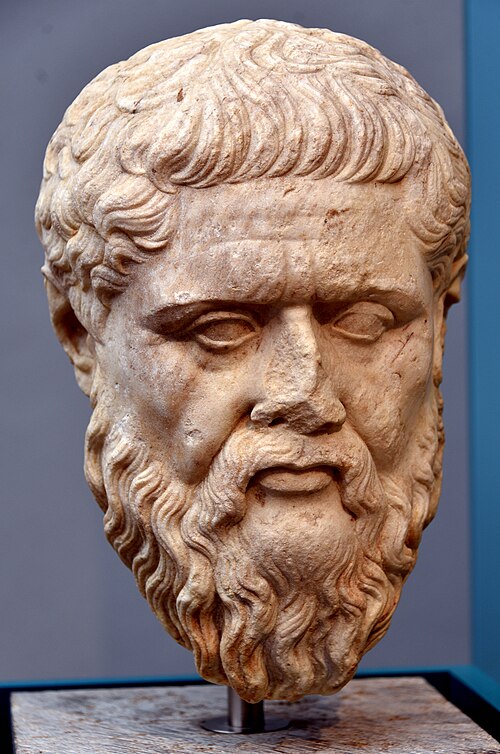
Photo by Osama Shukir Muhammed Amin, CC BY-SA 4.0, via Wikimedia Commons. Resized.
We often do not have wise rulers, but at least they have a limited term. They can be challenged, replaced and held accountable. So, the assumption isn’t that we’ll always choose the best ruler, but rather that no ruler has unlimited power. The law must stand above rulers, governments and majorities alike.
Economy
I think capitalism is the only model that works currently, but it shouldn’t run wild. We need stronger regulation and social welfare programs to remedy some of its undesired traits, such as inequality, monopolies, environmental pollution, and many more.
Broadly speaking, planned economies do not work. History has shown us already. No wonder the USSR collapsed (it wasn’t the sole factor for its collapse thought) and China had to pivot to an open market. Even North Korea started testing special economic zones with an open market since 1991.
Capitalism produces extraordinary wealth. Wealth that keeps accumulating in the hands of a few individuals, while others keep struggling to survive. I don’t think that is fair; not everyone is an entrepreneur. Most people sell their time, and those people should have a right to a good life too.
We need taxes to fund social programs, infrastructure, regulation to give people better working conditions, consumer protection, environmental safeguards, and so on.
Otherwise, we’d still be drinking radioactive water advertised as a cure.
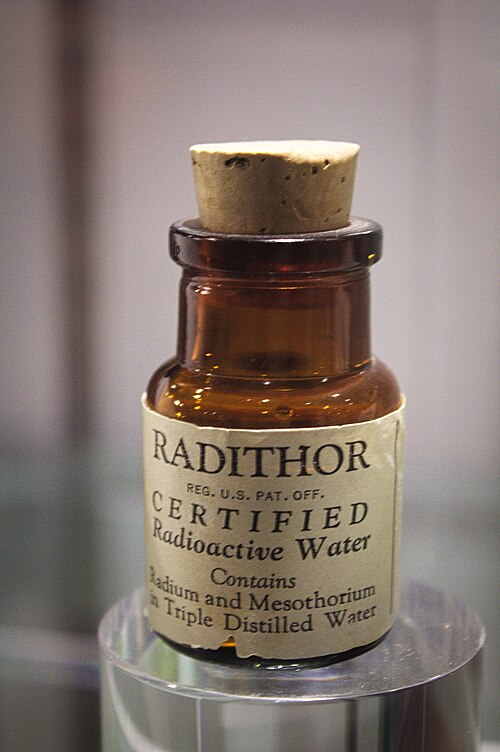
Photo by Sam LaRussa, CC BY-SA 2.0, via Wikimedia Commons. Resized.
And many people would die in accidents that could have either been prevented or mitigated by a safer response.
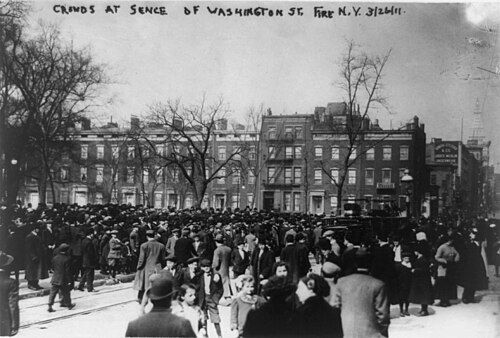
Crowds at the scene of the Triangle Shirtwaist Factory fire, New York City, 1911.
Freedom of Speech
I like the Brazilian definition of free speech. Everyone is free to express their opinions, including political, artistic, scientific and philosophical views.
However, freedom of speech is not absolute. It must be balanced with other constitutional rights such as personal honor, privacy, and the right to one’s image. The Constitution also guarantees the right of reply, proportional to the offense.
This approach reduces extremism, racial discrimination and other forms of harmful conduct.
Healthcare
A public healthcare system is a must-have. It just feels like common sense. Providing public healthcare doesn’t mean banning private healthcare, so I don’t understand how anyone can be against it.
Here in Brazil we have one. It is far from perfect, but it works, and it saves thousands of lives everyday without making people go broke.
Religion
State and religion should remain separate. Faith can be the source of meaning for people, but the state has to serve everyone, regardless of what they believe or whether they believe in anything at all.
I think there is wisdom to be found in many religions, just as there are darker passages and teachings people use to justify their prejudices, hatred, and violence.
Public Safety
There are plenty of systemic and social explanations for a crime, but none of them exempt individual accountability.
Prisons as institutions that recover individuals so they can participate in society again are simply a wishful thought. Often times it works in the opposite direction. A person robs a gas station, goes to jail and in there, they have to become a gang member in order to survive. And then that person’s entire life becomes related to crime: they struggle to find a good job due to their criminal history.
So what? Let’s give them a slap in the wrist and release them? Of course not. That is why, the best fix for this problem is prevention. Rehabilitation shouldn’t be ignored, but if we can prevent the crime from happening, that is even better.
One of the strongest predictors for high crime rates in cities is mostly poverty and lack of opportunities. Let’s reduce poverty and give people more opportunities (big brain moment).
Immigration
I don’t have a strong opinion here, since immigration has never been an issue in Brazil.
LGBT+ Rights
I support LGBT+ rights. Everyone should have the right to gender identity and expression. It costs you absolutely nothing to use a person’s preferred pronouns and treat them with dignity.
This doesn’t mean I agree with everything.
I think trans women competing with cis-women in sports is not fair, and we already have evidence that testosterone suppression reduces but doesn’t fully remove physical advantages. This isn’t a closed question though, and different sports federations have set different rules.
Another minor issue I have is with gender-neutral pronouns in Portuguese. I see no problem using them in English, since English already has they/them. In Portuguese not only do you have to make up a new pronoun, but you have to create a new set of entire grammatical structures to accommodate it. It is hard to follow and it sounds unnatural.
Abortion
I support abortion rights in accordance with the viability-based approach taken by states like California and New York.
In practice it means once a fetus is able to live outside the womb, delivery is the automatic choice as long as the patient’s life risks are observed.
Environment
Yeah, global warming is a natural event, but we are accelerating it drastically.
We have more than enough research on this subject. Humans are accelerating climate change by directly increasing CO2 emissions, deforestation, landfills, mining, plastic, and so on.
We need to protect the environment, by reducing consumption, reusing and recycling. Companies need to follow standards and regulations such as measuring and reporting emissions in order to reduce it throughout the supply chain.
Diversity, Equity and Inclusion
If implemented correctly, it is a good thing. I’m all in for representation. In Brazil, our universities already have minority quotas (aka Affirmative Action in the U.S) that predate DEI policies, and those help.
What I don’t like is when it becomes a mere target to be met or a list of checkboxes.
Another issue I have is with the entertainment industry. For example, in the beginning when Netflix made their commitments more explicit, you’d have a black character whose entire personality was being black. Like, why not give them more depth? As if every black character was “from the hood” or as if every gay guy were flamboyant.
Representation needs to feel organic otherwise you’re just enforcing stereotypes.
That being said, if I had to choose between no representation or a flawed representation, I’d choose a flawed one. But please, do improve.
Foreign Policy
Live and let live. China’s specific problems are for the Chinese to solve. No external interference, simple as that.
However, trade and commerce should follow some fundamental principles, such as no child labor or forced labor anywhere in the production chain.
That is it folks. Feel free to label me as you want and move on.